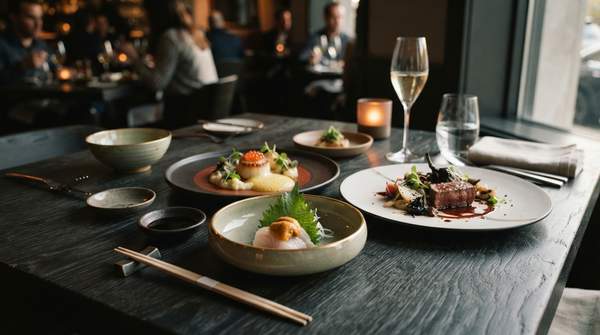
Carlo Petrini, Slow Food founder, dies, leaving global food legacy

Carlo Petrini, the visionary who convinced millions across 160 countries to slow down their eating, has died at 76 in his hometown of Bra, Italy.

IC
Isabela Costa

May 25, 2026 · 3 min read

Carlo Petrini, founder of the Slow Food movement, is remembered as a visionary who championed local traditions and a slower pace of eating.

Carlo Petrini, the visionary who convinced millions across 160 countries to slow down their eating, has died at 76 in his hometown of Bra, Italy. His passing marks the end of an era for a movement that profoundly shaped global food discourse and challenged industrial food systems, emphasizing the cultural and social aspects of what we consume. Yet, the Slow Food movement, founded on local traditions and a slower pace, achieved massive global expansion. Its future without its charismatic founder now appears uncertain. The movement will likely face a critical period of introspection and potential redefinition, focusing more on solidifying its established global network than on new initiatives in this post-Petrini era.

The Man Behind the Movement

Carlo Petrini, founder of the Slow Food movement, passed away at 76 in his hometown of Bra, Italy, confirmed by The New York Times and Hospitality Business Magazine. His death leaves a profound void for a global community.

From Local Protest to Global Manifesto

Petrini founded Slow Food in 1986, initially known as Slow Food Italy, to counter the rising fast-food culture, as reported by Hospitality Business Magazine. The Slow Food Manifesto was officially signed in Paris on December 9, 1989, solidifying his vision. Petrini served as president until 2022, a testament to his central role in formalizing a movement advocating for gastronomic pleasure and local food traditions.

A Worldwide Culinary Revolution

Under Petrini's leadership, Slow Food expanded to over 160 countries, a scale that surprised many given its 'slow' and 'local' ethos, according to the BBC. This impressive global reach, while a testament to Petrini's vision and the universal appeal of Slow Food's principles, now presents its greatest challenge: how to maintain a truly 'local' identity without its unifying founder.
The Future Without Its Founder

Petrini's nearly four-decade presidency, ending in 2022, inextricably linked Slow Food's identity to his personal leadership. His passing, just two years after stepping down, makes an already challenging leadership transition permanent and potentially more difficult. While his direct guidance is irreplaceable, the movement's established global presence and ingrained principles suggest it will continue, likely with a renewed focus on its existing network and local chapters.

Petrini's Enduring Legacy

What is Carlo Petrini's philosophy on food?

Carlo Petrini's philosophy centered on "good, clean, and fair food": delicious, environmentally sound, and equitable for all. He championed food as a connection to land and culture.

How has Carlo Petrini influenced sustainable food movements?

Petrini profoundly influenced sustainable food movements by prioritizing biodiversity and local systems. Initiatives like the Ark of Taste, cataloging endangered foods, and Terra Madre, a global network of food communities, fostered appreciation for traditional foodways and ecological stewardship.

What is the legacy of Carlo Petrini's work?

Petrini's legacy is a global movement advocating for mindful eating and sustainable agriculture, having created a network of millions who prioritize quality, tradition, and environmental responsibility. By Q3 2026, Slow Food International will likely face significant operational challenges as it redefines its global-local balance without Petrini's personal guidance, yet its core principles will endure.