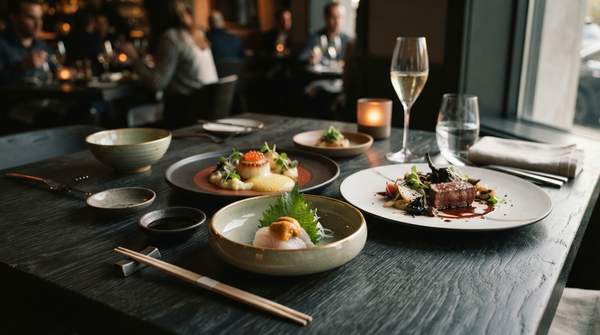
The tasting menu—the parade of small, deliberate courses that defines modern fine dining—was born in 16th-century Japan, not France. The multicourse kaiseki meal, served in the style of a tea ceremony, is identified by culinary historians as the format's birthplace. French nouvelle cuisine chefs then encountered that tradition during mid-century visits to Japan and reshaped it into the menu dégustation, a showcase for a single chef's creativity. Today the format is diversifying again, into shorter, plant-based, and waste-conscious variations that answer a very different set of diner expectations.
The Ancient Roots: Japanese Kaiseki
When I trace the tasting menu back to its source, I land not in a Parisian dining room but in a Japanese tea ceremony. As Anna Haines recounts for TASTE, the multicourse kaiseki meal "dates back to the 16th century," and its birthplace is Japan—a fact that surprises many who associate the format with France. Kaiseki was never merely a way to eat; it was a ceremonial meal with a specific emphasis on seasonality, beautiful presentation, and conveying a sense of place.
That ceremonial character matters for understanding everything that came after. Kaiseki's courses follow a deliberate rhythm tied to ritual and to the seasons, with each dish composed to reflect its moment in the year. The diner's role was to receive and appreciate, not to choose. This is the philosophical seed of the tasting menu: the kitchen, guided by tradition and season, decides what comes next, and the sequence itself carries meaning.
It is worth pausing on how radical that idea would prove. A meal structured as a narrative of many small, seasonal courses—rather than a single large plate chosen from a list—was a framework that could travel. For four centuries it remained a distinctly Japanese art form. Then, in the mid-20th century, French chefs went looking for inspiration and found it.
French Nouvelle Cuisine and the 'Menu Dégustation'
The pivotal transfer happened when French nouvelle cuisine chefs visited Japan and encountered kaiseki firsthand. Haines places those visits in the 1960s; Tasting Table's account, naming Paul Bocuse among the celebrated chefs who traveled to Japan "in search of culinary excellence," dates the wave of visits to the 1970s. Either way, the effect was the same: the chefs were inspired by the ancient tradition and adapted kaiseki into their own version, which they called a menu dégustation.
The French adaptation was not a copy. The nouvelle cuisine version involved at least four courses, each no more than a few bites, and—crucially—saw the chef take greater authority over the diner's experience than was previously common. Where kaiseki's authority came from ceremony and season, the menu dégustation's authority came from the chef personally. As Tasting Table explains, the format coincided with nouvelle cuisine's evolution from rich, heavy dishes toward refined, seasonal cooking where presentation was paramount, and it allowed accomplished chefs to compress more ingredients, flavors, and techniques into a single dining experience.
This is where the philosophy shifted most sharply. The tasting menu became a stage for individual creativity—proven, as Haines puts it, "through course after course after course (and then a few petits fours, after dessert)." The international prestige of the French chefs who popularized the format, coupled with a burgeoning culinary media industry, contributed to the rise of the celebrity chef. Thanks to that prodigious influence, the format spread to fine dining restaurants around the world over the following decades.