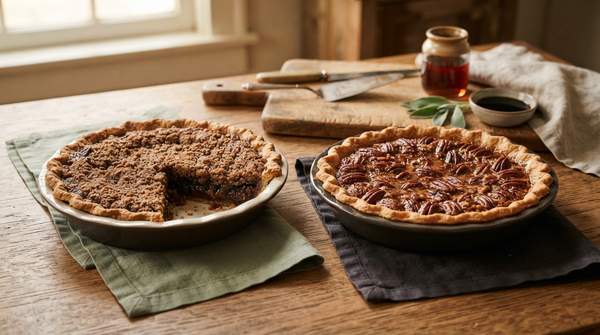
The story of American food is a story of adaptation, a tapestry woven from immigrant traditions reshaped by new ingredients on new soil. Many dishes considered national staples are the result of this process, and perhaps none more so than the regional pie. The distinct characteristics of Pennsylvania's Shoofly Pie and New England's Maple Pie are direct results of the specific local ingredients and cultural groups prevalent in their respective regions, offering a taste of history born from necessity and ingenuity.
The Evolution of American Pie Traditions
Early European settlers brought their pie-making traditions with them, but they had to adapt to the ingredients and techniques available in the New World. According to What's Cooking America, an online culinary resource, colonists began baking with berries and fruits that Native Americans pointed out to them. As settlers moved westward, this pattern of using local resources led to the development of distinct regional pies.
Pioneer women often served pie with every meal, cementing it as a core part of American culture. Colonial bakers used round pans to stretch ingredients, a practical measure that became a defining feature. This process of culinary adaptation, where foodways from other lands are reshaped in new environments, forms the backbone of American cuisine. As the Reher Center for Immigrant Culture and History notes, understanding American food requires understanding how people adapted it to new soil and new lives.
Pennsylvania's Shoofly Pie: A Molasses Legacy
In the heart of Pennsylvania Dutch country, one pie stands out as a symbol of the region: the Shoofly Pie. This molasses-based pie originated with the Pennsylvania Dutch, a cultural group known for its rich culinary traditions. The pie is a staple in and around Lancaster County, where establishments like Dutch Haven, founded in 1936, claim to use an original recipe for their "wet-bottom" version.
According to research cited by author Alex Bresler in an article for Matador Network, the name "shoofly pie" didn't enter common use until the 1880s and first appeared in print in 1926. The name's origin is the subject of several theories. Bresler notes that it may refer to a popular brand of molasses from the era called Shoofly Molasses. Another theory connects it to a traveling circus act of the late 1800s that featured Shoofly the Boxing Mule. Regardless of its name's true source, the pie's reliance on molasses reflects the ingredients readily available in the region's history.