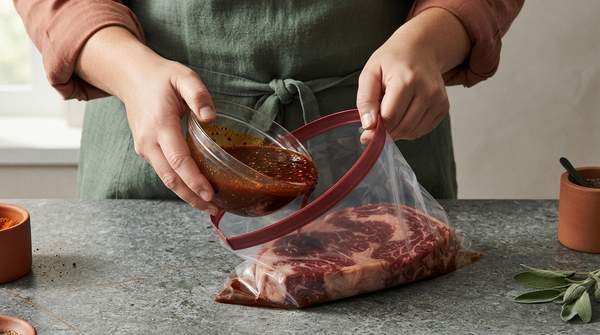
The short answer: brine when juiciness is the goal, marinate when flavor is. Brining incubates meat in a high-salt solution—or, in its dry form, salt applied directly—so the cooked meat turns out juicier, more flavorful, and more tender. Marinating, as food writer Nik Sharma puts it in The Flavor Files, is essentially the same idea with less salt, and both liquids can carry acids, aromatics, and tenderizers. The USDA's Food Safety and Inspection Service draws the practical line the same way: a marinade is an acidic sauce for flavor and surface tenderizing, while a brine is a salt solution for moisture and tenderness. Here is how the science works and how to choose.
The Science of Marinating: Flavor and Surface Tenderness Through Acid
A marinade's defining ingredient is acid—think citrus juice, vinegar, or yogurt. Acid denatures proteins on the meat's surface, which lightly tenderizes the exterior and opens up the muscle structure enough to carry flavor compounds inward. That is why the USDA describes marinating as a route to flavor and tenderness rather than to moisture retention.
The key limitation is depth. Because a marinade works from the surface inward, its tenderizing and flavoring effects concentrate in the outer layers of the meat. A thick cut marinated for hours may taste intensely flavored at the edges and barely seasoned at the center. Sharma notes that marinades and brines can share the same toolbox—acids like lactic or citric acid, garlic, onions, herbs, and spices—and that enzyme-based tenderizers can be added to either, though some work less effectively in a very salty brine.
So the honest framing is this: a marinade is a flavor delivery system with a mild surface-tenderizing side effect. It is not a cure for a dry, lean cut, because acid does not improve the meat's ability to hold water during cooking the way salt does. If your problem is juiciness, acid is the wrong tool.
Wet Brining vs. Dry Brining: Choosing Your Salt Method
Salt is the active ingredient in both brining styles, and it works by denaturing muscle proteins so they absorb and hold more water through cooking. The difference is the delivery. Wet brining submerges the meat in a salt solution; dry brining seasons it with salt and spices with no liquid at all.
The USDA describes dry brining as an easy alternative to traditional liquid brining: a two-day refrigerator process, done in a food-grade plastic bag, that first draws moisture out of the poultry and then lets that now-seasoned liquid reabsorb into the meat—without adding any additional water. That distinction matters for texture. On poultry with skin, extra surface water is the enemy of crisp skin, and low-and-slow cooking can turn wet-brined skin rubbery; the smoking-meat resource at Jeff Phillips's site recommends dry brining for skin-on birds, or letting wet-brined poultry air-dry in the fridge before it goes in the smoker.
Each method has trade-offs. Wet brining adds water weight and guards lean cuts against drying out, but it requires a container, refrigerator space, and a drying step afterward—Scott Groves, writing for CKitchen, notes that drying the surface after a wet brine improves browning. Dry brining is simpler, seasons more predictably, and supports better browning, which is why restaurant kitchens frequently choose it. Groves also flags the common mistakes: too much salt overpowers the meat, and brining too long harms texture. Whatever the method, always brine under refrigeration, never at room temperature.