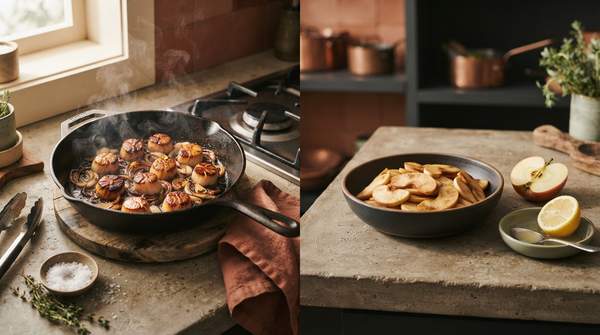
When a cut apple turns brown on the counter and a pan of onions turns brown on the stove, two entirely different chemical processes are at work. Caramelization is a heat-driven breakdown of sugar alone; enzymatic browning is an oxygen-driven reaction run by enzymes inside the plant's own tissue. Once you can tell them apart, you can push the first one toward sweet, nutty flavor and shut the second one down before it ruins your produce.
Understanding Browning: Beyond Maillard
Most cooking conversation centers on the Maillard reaction, the non-enzymatic browning that happens between free amino groups and carbonyl groups in food. It deserves its fame, but it is not the only browning game in town, and in vegetables it is often not even the main one. A scientific review of browning in fruits and vegetables distinguishes three separate processes: the Maillard reaction, enzymatic browning driven by an enzyme called polyphenol oxidase (PPO), and caramelization, which is browning caused by the degradation of carbohydrates. Each has its own trigger, its own ingredients, and its own control methods. This article focuses on the two that home cooks most often confuse or overlook: caramelization and enzymatic browning.
Caramelization: Sweetness Transformed by Heat
Caramelization is the oxidation of sugar, a process used extensively in cooking for the resulting nutty flavor and brown color. It is a non-enzymatic reaction, which means no enzymes and no proteins are involved—just sugar, heat, and time. As the process occurs, volatile chemicals are released, producing the characteristic caramel flavor, while water is removed as steam and the sugar molecules themselves break down.
The reaction depends heavily on the type of sugar. According to Kansas State University's Wild West District extension coverage, sucrose and glucose caramelize around 160°C (320°F), while fructose caramelizes at a much lower 110°C (230°F). Caramelization of sucrose begins with the melting of the sugar at high temperatures, followed by foaming as it boils. This is why patience matters: the sugar has to actually reach its threshold temperature before the transformation begins.
Enzymatic Browning: The Reaction to Air
Enzymatic browning is a different beast entirely. Here, phenolic compounds naturally present in fruits and vegetables are oxidized by the enzyme polyphenol oxidase, and oxygen from the air is the essential partner. The reaction matters most in fruits, vegetables, and seafood, and it typically begins the moment you cut into produce, exposing the flesh to air.
Unlike caramelization, this reaction usually works against the cook. A sliced apple, a cut potato, a bruised pear—the discoloration that follows is PPO at work. The same review notes that various physical and chemical treatments can inhibit browning in fruit and vegetable products, and that natural products and their extracts, such as onion and lemon, are known to hinder browning of certain items. In other words, this is a reaction you can interrupt with ordinary kitchen ingredients.
Caramelization vs. Enzymatic Browning: A Quick Reference
Use this table to diagnose which reaction is happening in your kitchen and choose the right response. The two processes differ on every dimension that matters: what starts them, what they consume, what they need, what they produce, and how you control them.
| Dimension | Caramelization | Enzymatic Browning |
|---|---|---|
| Trigger | High heat applied to sugar | Cutting or bruising exposes flesh to air |
| Reactants | Sugars only—no enzymes or proteins involved | Phenolic compounds oxidized by the PPO enzyme |
| Required Conditions | Heat above the sugar's threshold: about 160°C (320°F) for sucrose and glucose, 110°C (230°F) for fructose | Oxygen from the air plus active PPO enzyme; no heat required |
| Typical Outcome | Nutty flavor, brown color, volatile aroma compounds | Undesirable discoloration on cut produce |
| How to Control | Promote with sufficient heat; the reaction depends on the sugar type | Prevent by limiting oxygen, adding acid, or inactivating the enzyme |
The key diagnostic question is simple: is heat present? Browning that requires a hot pan is caramelization (or Maillard); browning that happens at room temperature on cut surfaces is enzymatic. The control strategies follow directly from the mechanism—heat and dryness for the first, oxygen exclusion and enzyme inhibition for the second.
Techniques to Control Caramelization
To promote caramelization, manage heat with the sugar thresholds in mind. Because fructose caramelizes at 110°C (230°F) while sucrose and glucose need about 160°C (320°F), the sugar present in your vegetable determines how much heat and time the browning will demand. Onions, which carry their own sugars, will caramelize in a hot, patient pan as water cooks off as steam and the sugars break down into nutty, brown compounds. Rushing the heat before moisture has escaped works against you, since the reaction needs the sugar concentrated and hot enough.
To prevent enzymatic browning, attack the reaction's two requirements: oxygen and active enzyme. Immersing cut produce in water or a solution limits oxygen contact with the flesh. Adding an acid such as lemon juice or vinegar lowers the pH and hinders the reaction, which is why lemon juice is a classic treatment for cut apples. Cooking the fruit or vegetable inactivates the PPO enzyme outright, stopping the reaction entirely. Blanching—briefly plunging produce into boiling water—works the same way, though the evidence notes it can cause undesirable color or flavor changes and softening of texture, and is rarely used for frozen fruits eaten without cooking.
Mastering Browning for Enhanced Flavors
Home cooks can intentionally control browning in vegetables by understanding the distinct conditions for caramelization and enzymatic browning and applying targeted techniques. The two reactions never swap fixes: heat will not stop a cut apple from oxidizing, and lemon juice will not caramelize an onion. The measurable indicator of success is straightforward: achieving the desired sweet, nutty flavors and brown colors through caramelization, or preventing unwanted discoloration in cut produce. Watch the pan for the foaming stage that marks sucrose caramelization, and watch the cutting board for flesh that stays fresh-colored after slicing—each outcome confirms you have steered the right chemistry on purpose.
Sources
- The Maillard Reaction — Wild West District
- CHESCI