For the home cook captivated by the rich traditions of Southern cuisine, the journey to mastering a perfect gumbo or flaky, sky-high biscuits can feel both exciting and overwhelming. The best path forward isn't a single, one-size-fits-all class but rather a format that aligns with your personal learning style, culinary ambitions, and desired experience. The choice largely comes down to three distinct approaches: immersive in-person schools that offer a deep dive into a region's foodways, hands-on workshops focused on perfecting a single iconic dish, and flexible online courses that bring Southern flavors to your kitchen on your own schedule. Understanding the trade-offs between these formats is the first step toward truly cooking from the heart.
Immersive In-Person Schools: A Deep Dive into Regional Cuisine
For those who believe food is inseparable from place, an immersive in-person school offers a comprehensive cultural and culinary experience. These schools are often destinations in themselves, grounding their lessons in the specific history of a city or region. The New Orleans School of Cooking, for example, centers its entire curriculum on the city’s famed Cajun and Creole traditions. According to the school, it provides a range of learning environments to suit different preferences. Students can choose demonstration classes to sit back and watch seasoned chefs prepare classic New Orleans dishes, or they can opt for fully hands-on sessions to personally cut, season, and cook an entire meal.
The school even offers "Lab Classes," which it describes as a one-dish experience designed to immerse students in the local culture. This model is ideal for the culinary traveler or any home cook seeking a deep, contextual understanding of how history, ingredients, and technique converge in a specific Southern style.
Single-Topic Workshops: Mastering Specific Southern Dishes
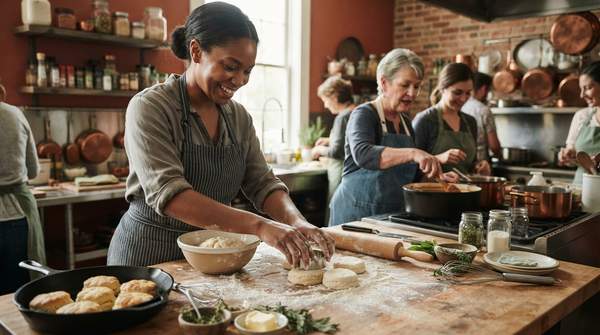
If your goal is less about a broad culinary survey and more about flawlessly executing a specific, beloved dish, a single-topic workshop may be the perfect fit. These classes are designed to provide focused, hands-on instruction on a particular recipe or skill set in an intimate, social setting. The Cookery Dallas, for example, hosts interactive, dinner-party-style classes where participants work together to craft featured courses from scratch. These classes, typically for 12 to 14 people, are designed for chefs at all levels, from beginners to advanced home cooks.
Instead of covering the breadth of Southern cuisine, a workshop might concentrate on mastering the techniques for perfect fried chicken, ethereal biscuits, or classic deviled eggs. The experience, as described by The Cookery, culminates with guests enjoying the meal they prepared together at a large farm table. This format is excellent for cooks who want to leave with the confidence and muscle memory to replicate one perfect dish in their own kitchen.