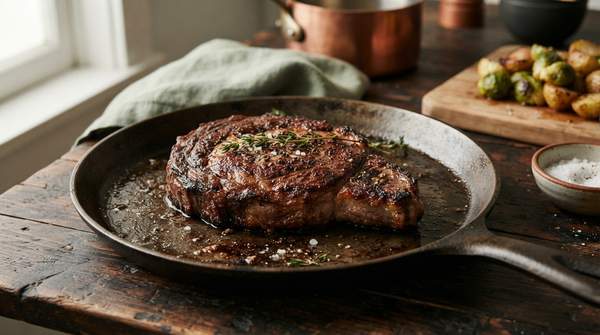
The secret to the deep, savory flavor of a perfectly seared steak, the complex aroma of roasted coffee, and the golden-brown crust of freshly baked bread is not just heat—it's a chemical process known as the Maillard reaction. This reaction creates hundreds of distinct flavor compounds, transforming simple ingredients into something rich and complex. For the home cook, understanding how to control this process is the key to unlocking consistently delicious results. By systematically managing four key variables—moisture, temperature, pH, and time—you can move beyond hoping for good browning and start creating it on demand.
The Science of Sizzle: Understanding Maillard's Magic
First described by French chemist Louis-Camille Maillard, this reaction is a chemical dance between amino acids (the building blocks of proteins) and reducing sugars that occurs when food is heated. In the cooking process, these reactions can generate hundreds of different flavor compounds, with the specific results depending on the food's chemical makeup, the temperature, and the cooking duration. Flavorists have even harnessed the Maillard reaction to create artificial flavors, particularly meat-like ones. It is a fundamental process in cooking, responsible for the desirable colors and aromas we associate with a wide range of foods. While often confused with caramelization, which involves only the browning of sugars, the Maillard reaction's inclusion of amino acids is what creates its signature savory, complex, and often "meaty" flavor profile.
Maillard Reaction Troubleshooting Guide
When your food fails to brown, it's typically because one of four key variables is out of balance. Use this guide to diagnose the problem and apply the right technique to enhance the Maillard reaction and build deeper flavor.
Controlling Moisture
The Problem: Your meat is grey and steaming in the pan instead of forming a deep brown crust.
The Solution: The single most important step for achieving a good sear is to remove as much surface moisture as possible before cooking. According to guidance from Modernist Cuisine, blotting food with paper towels or even letting it air-dry in the refrigerator is a crucial technique. Water boils at a temperature well below that required for the Maillard reaction to begin in earnest. As long as there is moisture on the surface, the energy from your pan will be spent turning that water into steam, effectively pinning the surface temperature too low for browning. A dry surface allows the food to make direct, hot contact with the pan, quickly reaching the temperatures needed for a flavorful crust.
Managing Temperature
The Problem: Your food is cooking through but remains pale and lacks the complex flavors of a good sear.
The Solution: The Maillard reaction accelerates at high temperatures. While it can begin at lower temperatures over long periods, rapid and robust browning typically requires heat above 140°C (285°F). Methods that deliver intense heat quickly, such as searing in a hot pan, deep-frying, or using a cooking torch, are highly effective. A torch is particularly useful for browning hard-to-reach areas or for finishing sous vide proteins, allowing you to sear the outside without overcooking the perfectly prepared interior. However, there is a limit; cooking at extremely high temperatures or for too long can push the reaction too far, resulting in bitter and unpleasant flavors that overwhelm the dish.
Adjusting pH
The Problem: You want to develop deep, roasted flavors in a wet preparation like a soup or puree, where high-heat searing isn't possible.
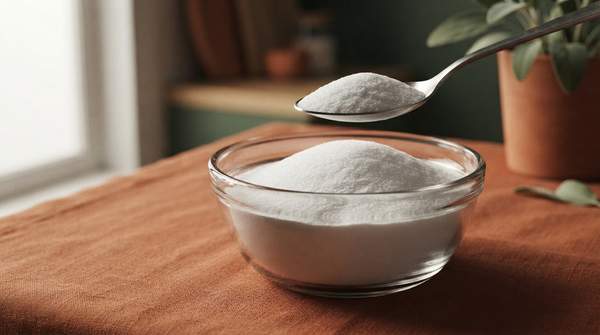
The Solution: The Maillard reaction is sensitive to the acidity or alkalinity of its environment, a factor measured by pH. A more alkaline (higher pH) environment significantly speeds up the reaction. Modernist Cuisine highlights a practical application of this principle: adding a small amount of baking soda to onions in a pressure cooker. This technique allows you to achieve the deep, complex flavor of slow-caramelized onions in just 20 minutes. The same method can be used to transform the flavor of carrot soups and other vegetable purees. This chemical shortcut is a powerful tool, but it must be used with care, as too much baking soda can create a soapy or unpleasant aftertaste.
Optimizing Time
The Problem: Your food either burns before it develops flavor, or the flavor remains one-dimensional.
The Solution: Time is the final critical factor. The duration of cooking determines the extent of the Maillard reaction and the specific flavor compounds that are created. Achieving the desired level of browning without going too far is a delicate balance. Prolonged heat exposure can lead to excessive browning and unwanted bitter notes. The ideal timing depends on the food and method. For a steak cooked sous vide, the goal is a very short, high-heat sear to create a crust without overcooking the inside. Conversely, developing the complex flavors in an onion soup traditionally requires hours of slow cooking. Understanding when to apply fast, intense heat versus when to allow for a longer, more gradual reaction is essential for flavor development.