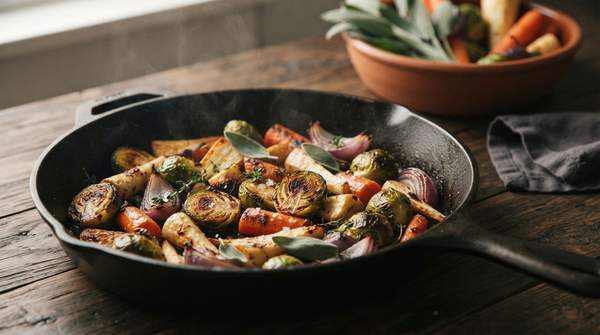
Elevating everyday home cooking often comes down to understanding a few fundamental principles rather than strictly following recipes. As cook, teacher, and author Samin Nosrat explains, mastering four core elements—salt, fat, acid, and heat—is key to becoming a good cook and creating delicious, balanced meals. This framework empowers home cooks to move beyond dependency on recipes, enabling them to identify and correct flavor imbalances in real time. When a dish tastes flat, heavy, or "almost there" but not quite right, the issue typically stems from an imbalance in one of these foundational elements. Introduction: The Power of Salt, Fat, Acid, Heat
The concept of balancing salt, fat, acid, and heat is a powerful approach to cooking that can instantly improve the flavor of your meals. This method, popularized by Samin Nosrat, helps you understand the "why" behind cooking, allowing you to build balanced flavor and fix bland food without rigid reliance on recipes. Nosrat, author of the James Beard Award-winning book *Salt, Fat, Acid, Heat*, emphasizes that while recipes can serve as "training wheels," understanding how these four elements work together is what truly levels up your cooking, fostering confidence and agency in the kitchen. Each element plays a specific, crucial role, and when they are in harmony, food tastes complete, intentional, and deeply satisfying.
Identifying Flavor Imbalances: What's Missing?
The first and most crucial step to correcting a dish is to taste it critically and identify what might be out of balance. Professional chefs instinctively taste constantly and adjust on the fly, a skill that home cooks can also develop. As Alida Ryder, author for Simply Delicious, notes, if your food tastes fine but not amazing, it's often missing one of the core flavor building blocks.
Learning to diagnose these issues means paying attention to specific sensory cues:
- If a dish tastes flat, dull, or bland, it often indicates a lack of salt or acid. The flavors might be present but don't "pop" or resonate on the palate.
- A sauce that feels one-dimensional or thin might benefit from fat, which adds richness and depth.
- When a dish feels heavy, sluggish, or overly rich, it frequently indicates a lack of acid, which is needed to cut through and brighten the flavors.
- If flavors seem underdeveloped or raw, it could point to insufficient or incorrect application of heat, preventing ingredients from transforming fully.
By learning to recognize these taste sensations, you can move beyond guessing and begin to diagnose and fix issues with precision, transforming your cooking process.