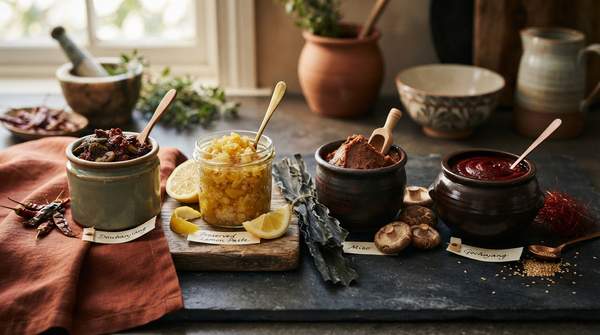
If you want to add spicy depth, briny sharpness, or savory umami to a dish you're already cooking, you don't need a new recipe—you need one of these four jars. Doubanjiang brings heat, salt, and fermented depth to a stir-fry; preserved lemon paste delivers a briny, sharp punch to stews and dressings; miso stirs a round, brothy quality into soup; and gochujang, Korea's red chili paste, works its way into marinades and sauces. I keep all four on hand, and here's how I'd help you tell them apart.
Unlock New Flavors: A Guide to Fermented Condiments
Fermented condiments earn their shelf space because fermentation does work that ordinary seasonings can't. As Slow Larder explains, these foods can add a gentle tang that spreads through each bite rather than hitting sharply at the front, plus savory depth—a round, brothy quality that makes simple foods taste more complete. A spoonful stirred into soup, beans, rice bowls, or dressing, the site notes, can make the other ingredients seem a little more awake.
There's often a little funk, too. Beginners may notice aromas that are earthy, cheesy, yeasty, fruity, or pleasantly briny—and that mild funk, Slow Larder says, is part of the charm for many fermented foods, though it varies by ingredient and age. That's the trade-off you're signing up for: more layered flavor in exchange for a livelier jar.