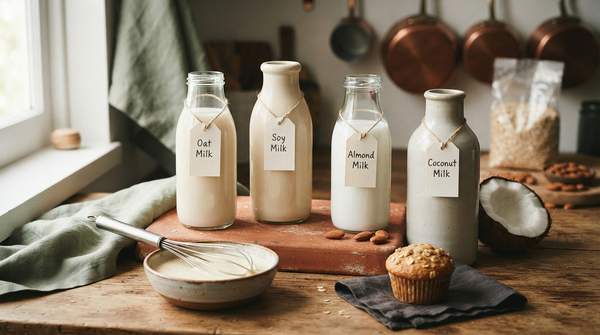
The short answer: there is no single "best" non-dairy milk, but there is a best one for each job. For lattes and everyday versatility, oat milk is the crowd favorite. For baking cakes and muffins, soy milk's high protein gives you the structure other alternatives can't match. For light, neutral sauces like béchamel or alfredo, unsweetened almond milk is the workhorse. And coconut milk, rich in saturated fat, earns its place where you want genuine creaminess—though it's a poor frother. Here's how the evidence behind each choice stacks up.
Understanding Non-Dairy Milks: Key Properties for Home Cooks
Two properties do most of the work when a non-dairy milk succeeds or fails in your kitchen: protein and flavor. Protein matters because it builds structure in doughs and batters and stabilizes foam in coffee. Writing for The Chopping Block, cooking instructor Ida notes that soy milk carries the most protein of the non-dairy options—about 5 to 7 grams per serving, by her account—which is exactly why she reaches for it when baking.
Flavor is the second axis. A milk that tastes neutral cold can turn assertive when heated, and a sweetened variety will hijack a savory dish. Nut milks like almond and cashew, Ida writes, keep their neutral flavor when heated and cooked, which is what makes them her pick for sauces and soups. Keep both variables in mind as you read the comparisons below, because nearly every recommendation flows from one of them.
Oat Milk: The Versatile Favorite
Oat milk is the generalist of the group. A guide from food education platform FoodUnfolded places it "somewhere in the middle" nutritionally and calls it "particularly well suited to coffee and cooking." That middle-of-the-road profile is its strength: it doesn't dominate a recipe, and it doesn't disappear in one either.
Its reputation in coffee is where oat milk really shines. Baristas and consumers have embraced it for its ability to foam well and its neutral, complementary taste—though barista-specific formulations are often engineered to enhance that foaming, so a standard carton may not perform identically. One caveat worth knowing: baking performance depends partly on protein content, which varies by brand, so oat milk is a solid all-purpose choice rather than a guaranteed star in structure-critical baked goods.
Soy Milk: A Baking and Savory Staple
If you're baking a cake, soy milk is the strongest candidate in this lineup. Ida's reasoning is straightforward: protein is vital for structure in doughs and batters, and soy milk has the most of any non-dairy milk. Her go-to technique is to add a tablespoon of apple cider vinegar per cup of soy milk, which mimics buttermilk, boosts leavening, and makes baked goods more tender.
Longtime home cook Becky Striepe, writing on her vegan recipe site, agrees from two decades of household experience: modern soy milk has a neutral flavor that works in everything from cereal to sauces, and because its protein content is comparable to cow's milk, "it performs like a champ in baking." She notes it's the closest alternative to cow's milk in flavor and texture—a big change from the "beany, quick-to-separate stuff" of the 1990s. One qualification: choose unsweetened varieties for savory dishes to avoid a sweet aftertaste.