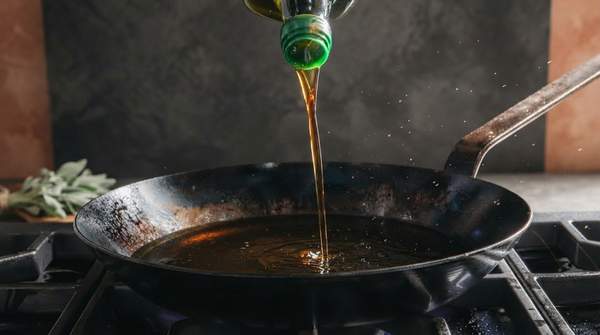
Extra virgin olive oil belongs in far more of your cooking than the old "smoke point" warning suggests. The chefs at the Culinary Institute of America say you can, without question, fry with olive oil and get great results, and a heating study found extra virgin olive oil produced low levels of unhealthy polar compounds compared with other common oils. The real question isn't whether EVOO can take heat—it's whether you want its flavor in the dish, and how much heat the application involves.
Beyond the Basics: Understanding Extra Virgin Olive Oil
Extra virgin olive oil is the highest grade of olive oil, extracted through mechanical processes at controlled temperatures without chemical refining, which is what preserves its characteristic flavor and aroma. It's also the most widely used type in North America, accounting for about 60% of retail olive oil sales, according to the North American Olive Oil Association. That popularity reflects its versatility: the same bottle can dress a salad, anchor a marinade, grease a grill, or finish a finished plate.
What makes EVOO distinctive among cooking oils is the breadth of flavor profiles it offers. Unlike refined oils engineered toward neutrality, extra virgin runs from delicate and buttery to grassy, peppery, and robust. That range is a feature, not a flaw—but it means choosing well requires thinking about flavor as deliberately as you think about heat. When shopping, look for the words "extra virgin" on the label, and consider recognized quality marks such as the North American Olive Oil Association's Quality Seal.
Debunking the Smoke Point Myth: EVOO's Stability Under Heat
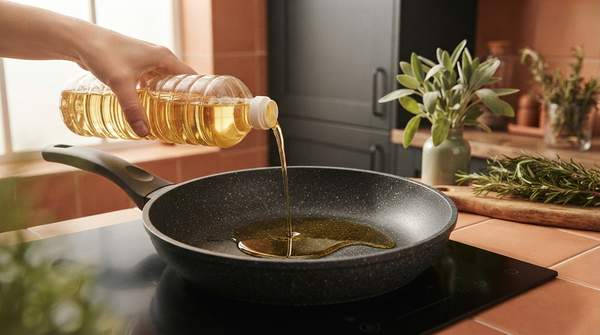
The persistent warning that extra virgin olive oil "breaks down" at cooking temperatures doesn't hold up. In a study that heated several common oils, including EVOO, to 240°C and then held them at 180°C for six hours, the extra virgin olive oil yielded low levels of unhealthy polar compounds and oxidative by-products compared with the other oils. Its fatty acid profile and natural antioxidant content allowed it to remain stable under heat, unlike oils high in polyunsaturated fats, which degraded more readily.
This is the key distinction most home cooks miss: smoke point and oxidative stability are not the same thing. Smoke point is the temperature at which an oil visibly smokes; oxidative stability is how well the oil resists breaking down chemically over sustained heat. The Culinary Institute of America dismisses concerns about smoke point or safety when cooking with olive oil, and the technical experts at the International Olive Council state plainly that "olive oil is ideal for frying." For shallow frying small amounts of food, the CIA recommends a good-quality extra virgin olive oil, depending on your budget and the flavor outcome you want.