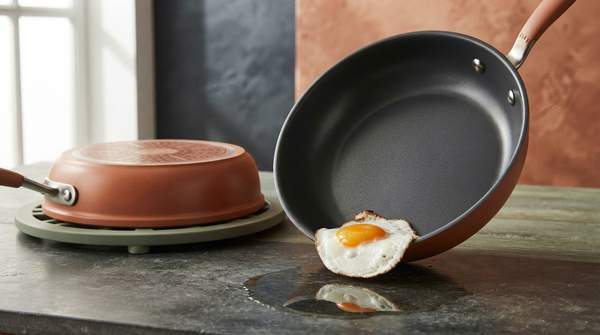
There is no single "best" non-stick pan—there are three very different technologies, each with a distinct trade-off. PTFE-based coatings (the classic Teflon-style pan) deliver the longest-lasting slick release but are themselves part of the PFAS chemical family and degrade if overheated above roughly 500°F (260°C). Ceramic-coated pans swap PFAS chemicals for a silica-based sol-gel layer, but that slickness typically fades faster—often within about three years. Seasoned cast iron and carbon steel contain no synthetic coating at all, last essentially a lifetime, and handle searing heat, at the cost of regular maintenance. Your choice comes down to which of those trade-offs matches your kitchen habits.
PTFE-Based Coatings: Performance and Safety Considerations
PTFE—polytetrafluoroethylene—is a synthetic fluoropolymer, a type of plastic prized for its extremely low surface energy, which is what makes eggs slide out of the pan. That performance is real and durable: coating-industry comparisons note that PTFE generally retains its non-stick release properties longer under heavy use than ceramic alternatives do. For delicate foods and low-fat cooking, it remains the benchmark.
The safety picture is more layered than the "PFOA-free" labels suggest. PFOA, a processing chemical historically used in making PTFE coatings, has been phased out—but PTFE itself belongs to the broader PFAS family, and independent testing has shown that "PFOA-free" does not mean "PFAS-free." Consumer Reports' lab testing of one PTFE-coated pan, the Swiss Diamond, found measurable levels of 16 of the 96 PFAS compounds it screened for, including an average of 4 parts per billion of PFOA despite the packaging claiming PFOA-free; combined PFAS levels reached 639 ppb in one sample and 703 ppb in another. That finding applies to the specific products tested, not every pan on the shelf—but it shows why a marketing claim is not a chemical analysis.
Heat is the other consideration. PTFE coatings begin to degrade and off-gas at approximately 500°F (260°C), a temperature an empty preheating pan can reach quickly. Overheated PTFE is associated with polymer fume fever—informally called "Teflon flu"—and with fumes hazardous to birds. The practical rule from coating and cookware sources alike: use moderate heat settings, don't preheat empty for long, and reserve hard searing for a different pan.