When researchers ran a Life Cycle Assessment (LCA) on food trays made from three materials, the paperboard tray—coated with polyethylene terephthalate (PET)—showed the smallest climate change impact, outperforming both virgin plastic CPET trays and recycled plastic rPET trays. That result, reported in research on sustainable paper-based packaging published in a peer-reviewed journal, happens to align with what many consumers already believe about paper. But the alignment is partly coincidental, because consumer judgments about packaging are, as the same research observes, mostly subjective and based on personal perception rather than the sustainability characteristics of the product. Understanding both the finding and the fragility of the intuition behind it is what separates an evidence-based choice from a lucky guess.
LCA Findings: Paperboard vs. Plastic Trays
A Life Cycle Assessment is a structured method for tallying environmental impacts across a product's entire life—raw material extraction, manufacturing, transport, use, and end of life. Rather than judging a package by what it is made of, an LCA asks what the package actually costs the environment, in a chosen impact category, across every stage it passes through. That is why two packages that look equally "green" can land in very different places once the full accounting is done.
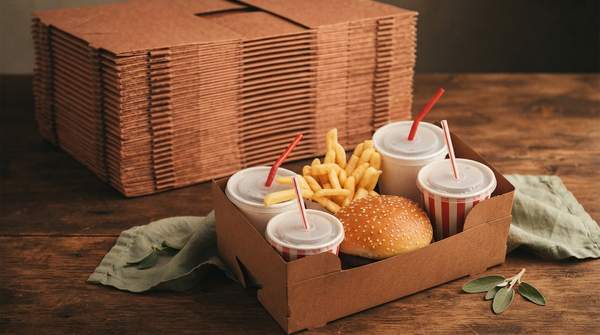
In this case, the assessment formed part of a development effort in which five new paper-based prototypes were created and discussed—two for biscuits and three for meat products. The trays at the center of the assessment were paperboard with a PET coating, and they were compared against two plastic alternatives: CPET, the crystalline, virgin form of PET, and rPET, made from recycled PET. The comparison was therefore not paper versus plastic in the abstract, but three specific tray designs built for the same food-contact job.
The result was unambiguous in its scope: the paperboard tray had the smallest climate change impact of the three. Both the virgin CPET tray and the recycled rPET tray scored higher. One detail deserves emphasis—recycling did not close the gap. Even the tray made from recovered plastic material carried a higher climate change impact than the coated paperboard tray in this comparison. That is a genuinely useful data point, but it is also a narrow one. The assessment measured climate change impact specifically, for these particular prototype trays, and its published findings do not extend to water pollution, resource depletion, or microplastic pollution.
Consumer Perceptions of Sustainable Packaging
Here the story takes an interesting turn. The same research documents that consumers already rank paper as the most environmentally friendly packaging material and plastic as the least, when comparing plastic, paper, glass, and metal—findings the study notes correspond with previous research. Participants in a Swedish study highlighted the negative environmental impact of plastic packaging and reported paper as the more environmentally friendly option.
So for these trays, the LCA finding and popular intuition point in the same direction. Paper wins on measurement, and paper wins in the public imagination. If the goal were simply to confirm a preference, the story could end there. But the research adds a caveat that changes how the alignment should be read: consumers are still unclear as to what the most sustainable packaging actually is, with their judgments being mostly subjective and based on personal perception rather than the sustainability characteristics of the product.
That distinction matters because getting the right answer for subjective reasons is fragile. A consumer who picks the paperboard tray because paper "feels natural" is not applying the LCA's logic—they are pattern-matching on a material category. The same shortcut could easily misfire in a different product category, a different coating, or a different impact category, and the consumer would have no way of noticing.
Food Tray Environmental Impact: LCA vs. Perception
The table below juxtaposes the measured climate finding for each tray material against what consumers generally believe and where each material comes from. The purpose of the comparison is not to crown a universal winner but to show where belief and data align for these specific trays—and where the belief rests on perception rather than evidence.
| Material | Climate Change Impact (per the LCA) | Common Consumer Perception | Raw Material Source |
|---|---|---|---|
| Paperboard tray (PET coating) | Smallest of the three | Paper generally ranked most environmentally friendly of plastic, paper, glass, and metal | Wood-based paperboard with a plastic coating |
| CPET tray | Higher than paperboard | Plastic generally ranked least environmentally friendly | Virgin crystalline PET |
| rPET tray | Higher than paperboard | Plastic generally ranked least environmentally friendly | Recycled PET plastic |
Read the table with its limits in mind. The climate column reflects one specific LCA of specific prototype trays developed for biscuits and meat products; the perception column reflects general consumer rankings across packaging materials, not opinions about these particular trays. One detail a simple "paper good, plastic bad" shortcut would miss entirely: the winning paperboard tray still contains plastic, in the form of its PET coating. The measured advantage came from the overall life cycle of the design, not from the absence of plastic.
Bridging the Gap: Science vs. Perception
The gap here is subtler than the usual "consumers are wrong" narrative. In this study, intuition and measurement agree on the ranking, which might suggest no correction is needed. But agreement on an outcome is not agreement on a method. The LCA reached its conclusion by quantifying climate change impact across the trays' life cycles; consumers reached theirs through subjective judgment, as the research itself characterizes it.
That difference becomes decisive the moment the comparison changes. The LCA result covers climate change impact only, for trays of these specific designs. It cannot be generalized to all paper versus all plastic packaging, and it does not address other environmental harms. Someone relying on perception alone has no way to know when the shortcut fails—swap in a different coating, a heavier tray, or a different impact category, and the ranking could shift without the consumer ever noticing. Someone relying on assessment findings at least knows the boundary of what was measured and can ask for the next study before deciding.
There is also a practical lesson in the rPET result. Recycled content is widely treated as an automatic sustainability upgrade, yet in this comparison the recycled plastic tray still carried a higher climate impact than the paperboard tray. The lesson is not that recycling is worthless; it is that single attributes—recycled, natural, paper, plastic—rarely determine an outcome on their own. The full life cycle does.
Rethinking Your Packaging Choices
When evaluating the environmental impact of food packaging, prioritize scientific Life Cycle Assessment findings over general perceptions, especially for specific product categories like food trays. That does not mean dismissing intuition outright—it means checking whether the intuition is backed by measurement for the product in question, and asking which impacts the measurement covered. For these trays, the measurement happens to side with the paperboard option on climate change impact; for another product, it may not.
The shift this article hopes to support is observable: a move in consumer discussions and purchasing decisions reflecting an understanding of specific LCA results for packaging materials, rather than relying solely on broad material categories like "paper" or "plastic." The next time you weigh a paperboard tray against a plastic one, the evidence-backed question is not which material feels greener, but which comparison—covering which impacts, for which product—actually supports the choice.