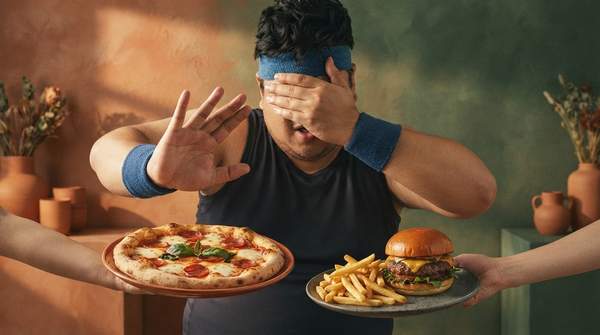
That sudden, magnetic pull toward a chocolate bar or a bag of chips is not a character flaw, and it isn't random either. Food cravings emerge from a tangle of hormones, brain chemistry, emotions, and learned habits—which means the most effective way to manage them isn't white-knuckled willpower, but understanding what set the craving off in the first place and matching your response to that cause. Here's how the science works, and how to use it.
Understanding Food Cravings: More Than Just Willpower
When I first started paying attention to my own cravings, I assumed they were simple: my body wanted food, end of story. The reality is more interesting. As UC San Diego's Center for Healthy Eating and Activity Research (CHEAR) explains, cravings typically arise from a combination of hormonal, psychological, and emotional factors—not from a single failure of self-discipline. That reframing matters practically: if a craving has a cause, it has a lever. "Cravings can feel like they hit out of nowhere—but they're not random, and they're not a sign of weakness," as CHEAR puts it in a post on outsmarting cravings. Treating a craving as information rather than an enemy is the first step toward responding to it deliberately.
The Biological Roots of Your Cravings
Several biological systems shape what and when you want to eat. Hormones like ghrelin, which signals hunger, and leptin, which signals fullness, regulate your appetite; when their levels shift, they can create intense urges for specific foods, according to CHEAR's guide to craving management. On top of that sits the brain's reward system. When you eat something you enjoy, dopamine is released, producing pleasure and encouraging you to seek that satisfaction again. Serotonin, another mood-linked chemical, is also associated with the pleasure-and-reward loop that makes certain foods so compelling.
The type of food matters here, too. Harvard's Nutrition Source warns that hyperpalatable and ultraprocessed snacks—high in sodium, fat, sugar, and calories but low in nutrition—are precisely the foods that trigger brain reward pathways and cause cravings to eat more. In other words, the foods most engineered to be irresistible are the ones most likely to hijack the machinery.
Psychological and Emotional Triggers
Biology doesn't act alone. Many cravings are linked to emotions—stress, boredom, sadness, or even celebration—and to psychological conditioning built through repetition. If you've eaten popcorn at every movie since childhood, the movie itself becomes part of the craving. Environmental cues like food advertisements, the smell of a bakery, or simply the time of day can spark urges through learned associations rather than any genuine physiological need.
There's also a counterintuitive finding worth knowing: trying to suppress thoughts about a food can intensify cravings for it. A scientific review on the psychology of food cravings published in the PMC research archive notes that cravings tend to discriminate between people who restrict their eating and those who don't, and that dieting and deprivation play a role in how cravings behave. The lesson isn't to give up on structure, but that rigid forbidden-food rules often backfire.
Identifying Your Personal Craving Profile
Before you can manage a craving well, you have to know what kind it is—and that takes a little observation. The UNC Lineberger Comprehensive Cancer Center's nutrition program suggests treating cravings as suggestions to eat rather than commands to overindulge, and trying to understand each one in relation to your mood or situation so you can fix the root cause. In practice, I've found the fastest diagnostic is a pause and two questions: Am I physically hungry—could I eat a plain meal right now? And what just happened before this craving arrived? A stressful phone call, a skipped lunch, or a familiar couch-and-TV setup each point to a different driver, and therefore a different best response.
Evidence-Based Strategies for Managing Cravings
Once you've identified the likely driver, several well-supported techniques fit different situations. Mindful eating—slowing down, savoring each bite, and attending to hunger and fullness cues—helps you distinguish genuine hunger from emotional or habitual urges, as CHEAR emphasizes. For cravings that arrive with stress or restlessness, behavioral redirection works: a brisk 15-minute walk can help reduce a food craving, according to a military health tip sheet on coping with cravings, which also recommends substitution (fruit for a sweet craving, air-popped popcorn or lightly salted nuts for a salty one) and drinking water, since dehydration is often mistaken for hunger.
For the foundation itself, the same tip sheet and UNC Lineberger's nutrition program converge on the same advice: eat regular, balanced meals with enough protein and fiber, and don't skip meals, because skipping just makes you hungrier later and sets up overeating. And there's a specific, tested redirection technique worth learning. In research on regulating food cravings published in the PMC archive, participants who applied a strategy called LATER—label the craving, accept it, tolerate it, explore its cause, and respond with an alternative activity—reported significantly reduced cravings compared with a "now" instruction, a result the researchers replicated in a follow-up neuroimaging study.
Your Personalized Craving Management Framework
The framework below classifies the most common craving triggers into three causal categories—biological, emotional, and environmental/habitual—and maps each to a strategy matched to its mechanism. Find the row that best describes what you're feeling or seeing, and use the paired response.
| Craving trigger (what you're feeling or seeing) | Likely cause category | Recommended strategy | Why it works |
|---|---|---|---|
| Sudden urge for sugary, fatty, or ultraprocessed foods | Biological (reward system) | Substitute a less-processed option: fresh fruit, a handful of nuts, or low-sugar yogurt | Hyperpalatable foods trigger brain reward pathways and drive cravings for more; swapping the food interrupts that loop |
| Physical hunger, low energy, or intense food thoughts | Biological (hunger hormones) | Eat three balanced meals daily with adequate protein and fiber; don't skip meals | Ghrelin and leptin regulate hunger; skipping meals intensifies hunger and leads to overeating later |
| Craving tied to stress, boredom, or strong emotion | Emotional | Apply the LATER steps: label, accept, tolerate, explore the cause, respond with an alternative like a 15-minute brisk walk | Research participants reported significantly reduced cravings after using LATER versus immediate indulgence |
| Craving sparked by an ad, a smell, or a familiar setting | Environmental / habitual | Pause, ask whether you're truly hungry, distract yourself, and wait to see if it passes | These are conditioned, learned responses rather than physiological needs, and cravings often fade with distraction |
| General pattern of frequent, hard-to-resist cravings | Mixed | Mindful eating plus adequate sleep and stress management | Insufficient rest increases the likelihood of craving high-calorie, nutrient-poor food, and mindfulness separates real hunger from emotional urges |
One caution as you use this: the strategies here are for common food cravings. They aren't medical advice, they don't address eating disorders, and they may not be enough for cravings rooted in a specific medical condition or nutritional deficiency—those deserve a professional's attention.
Empowering Your Choices: A Path to Craving Control
Readers should actively observe their craving triggers and apply the corresponding evidence-based management strategies to gain better control over their food choices. The practical shift is small but powerful: you cannot control whether a craving appears, as UNC Lineberger's nutrition program puts it, but you can control your reaction to it. Track what happens just before your next few cravings, match the trigger to its category, and try the paired strategy rather than a generic tip.
The measure of success is concrete: a reduction in the frequency or intensity of unwanted food cravings, or an increased ability to consciously choose a response other than immediate indulgence. Watch for that shift over the coming weeks—it's the clearest sign the framework is working for you.
Sources
- How to Outsmart Food Cravings With Science-Backed Tips — Center for Healthy Eating and Activity Research
- Craving Management: Expert Guide to Understanding & Control Cravings — Center for Healthy Eating and Activity Research
- Cravings • The Nutrition Source — The Nutrition Source - Harvard Chan School
- The Psychology of Food Cravings: the Role of Food Deprivation - PMC
- Blanchfield
- 10 tips for managing food cravings - Nutrition Program
- Regulating Food Craving: From Mechanisms to Interventions - PMC