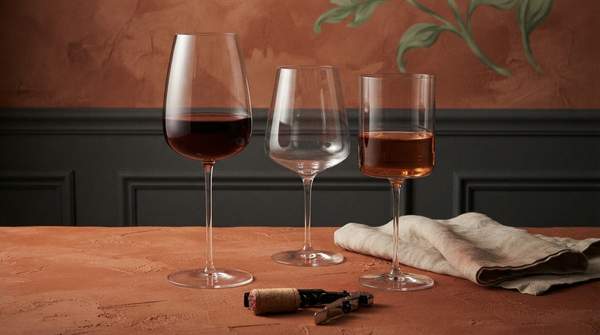
For most wine drinkers, the honest answer is this: one well-made universal glass will serve you well, and a small collection of two or three varietal-specific shapes will serve you better—but only if you drink those varietals often enough to notice. Glass shape genuinely changes how wine smells and tastes, because it controls how much air the wine meets and where the aromas collect. Here is how the three core archetypes work, and how to decide which path fits your habits, budget, and shelf space.
Universal Wine Glass: The Versatile Choice
The universal glass is the pragmatist's answer to a crowded cupboard. Its defining trait is a medium bowl that supports both aeration and aroma concentration at once, which is exactly the balance that specialist shapes achieve by splitting into separate designs. Wine-n-Gear's beginner guide describes this as "balanced performance" across most wine styles, with a beginner-friendly design that removes the pressure of matching a glass to every pour.
That same guide highlights the practical advantages that matter outside the tasting note: space-saving storage for small kitchens, and a consistent drinking experience without switching glasses between wines. Coravin's glassware guide makes the complementary point that not every drinker needs a dozen styles—shape affects how wine smells, tastes, and feels, but you don't need a full cabinet to benefit from that.
The trade-off is real, though. A universal glass aims for versatility rather than optimizing for a single varietal. It is an excellent everyday option, but it does not replace specialist shapes for individual grape varieties. If you drink a wide range of wines casually, that compromise is barely noticeable. If you drink the same bold red every Friday night, it is.
Bordeaux-Style Glass: For Bold Reds
When a wine is big, tannic, and structured, it needs room to breathe—and that is the entire logic of the Bordeaux-style glass. Wiens Cellars' winery blog advises that fans of bold reds should look for glasses with a larger bowl to allow the wine to breathe and release its complex aromas. The classic red glass of this type is tall and broad, giving the wine a large surface area exposed to air.
That surface area is the functional heart of the design. Oxygen exposure does two things for a full-bodied red: it softens the tannins that can make young Cabernet or Merlot feel harsh, and it allows the wine's complex aromas to develop rather than staying locked in the glass. Coravin's guide frames the same principle from the wine's side: wide bowls and wider openings enhance oxygen exposure and aroma release, softening tannins and showcasing complexity.
The Bordeaux shape specifically targets wines that benefit from significant air exposure. Pour a delicate, perfumed red into one and you may find the aromas dispersed rather than concentrated—the glass over-aerates a wine that never needed taming. That is why the bold-red glass and the aromatic-red glass are genuinely different tools, not marketing variations.
Burgundy-Style Glass: For Aromatic Reds
The Burgundy-style glass solves the opposite problem. Where the Bordeaux shape manages structure, the Burgundy shape maximizes perfume. JoyJolt's glassware guide describes its geometry precisely: a large, rounded bowl with a gently tapered rim, and an open surface area that encourages oxygen contact.
The purpose, per that guide, is aeration tuned for aromatic varietals—Pinot Noir, Nebbiolo, Barbera, and other soft, layered reds. The oxygen contact softens acidity and releases floral, fruit, and earthy notes, which is exactly what these wines depend on. As the guide puts it, these are wines that "thrive on nuance and perfume rather than structure."
Notice the difference in emphasis between the two red-wine shapes. The Burgundy bowl is wider and rounder than the classic red glass, which JoyJolt describes as slightly smaller and taller, balancing aeration with aroma concentration. A Pinot Noir poured into a tall, narrow glass can feel closed and shy; the same wine in a Burgundy bowl opens into its layered aromatics. The glass is not decoration—it is the mechanism.
Wine Glass Archetypes: A Comparative Guide
Use this table to map each archetype's design to the wines you drink most often. The reasoning path is consistent across all three: bowl size and rim shape control oxygen contact and aroma concentration, and each wine style needs a different balance of the two.
| Archetype | Key Design Feature | Best For | Primary Sensory Enhancement |
|---|---|---|---|
| Universal | Medium bowl sized for balanced performance | Most wine styles; minimalists and small kitchens | Supports both aeration and aroma concentration without optimizing for any single varietal |
| Bordeaux-style | Tall, broad bowl with large surface area | Full-bodied reds like Cabernet Sauvignon and Merlot | Maximizes aeration to soften tannins and develop complex aromas |
| Burgundy-style | Large, rounded bowl with gently tapered rim and open surface | Aromatic reds: Pinot Noir, Nebbiolo, Barbera | Encourages oxygen contact that softens acidity and releases floral, fruit, and earthy notes |
Read the table as a decision aid, not a rulebook: the universal row trades optimization for coverage, while the two specialist rows trade coverage for a better experience with their target wines.
Choosing Your Glassware: Universal vs. Specialist
Start with the question Wiens Cellars poses directly: consider the wines you love and drink most frequently. If your rack holds mostly bold reds, a larger-bowled glass is your priority. If you rotate across reds, whites, and everything else, the universal route makes more sense—Coravin's guide is blunt that not every drinker needs a dozen styles.
Then weigh the practical constraints. A universal set wins on storage space, budget, and the consistency of never choosing wrong; Wine-n-Gear's guide emphasizes its space-saving storage and consistent experience. A small specialist collection—typically a bold-red glass plus an aromatic-red glass—wins on sensory payoff for the wines you actually favor, at the cost of more cupboard space, more money, and the mild pressure of matching glass to pour.
A reasonable middle path follows from the evidence: buy universal glasses for everyday and entertaining, then add one specialist shape for the varietal you drink most. You get the coverage without committing to a full cabinet.
Making Your Glassware Decision
Choose your wine glassware based on your typical wine consumption, available storage, and budget, balancing the versatility of a universal glass with the enhanced experience of varietal-specific options for your favorite wines. The measurable indicator that you chose well is a noticeable improvement in the aroma and flavor perception of your preferred wines, or increased satisfaction with your glassware collection's practicality and versatility. Pour your go-to bottle into your new glass and compare it against your old one—that side-by-side sniff is the test, and it will tell you whether the specialist upgrade was worth it.
Sources
- Beginners Guide to Different Types of Wine Glasses: Shapes, Uses, and How to Choose the Right One — Wine-n-Gear
- Wine Glass Shape 101: The Ultimate Guide to Glasses — Coravin US
- The Science of Wine Glass Shapes and Their Effects on Flavor - Wiens Cellars — Wiens Family Cellars
- Wine Glasses Explained: Burgundy, Red, White & Stemless Styles — JoyJolt