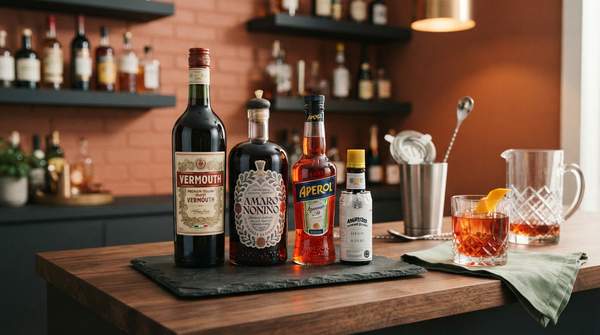
If you want your home cocktails to taste like the ones at a good bar, the fastest upgrade isn't another bottle of gin or whiskey—it's the small supporting bottles that sit beside them. Start with one bottle from each of four modifier categories: vermouth, liqueurs, amaro, and bitters. That single shopping trip covers the flavor architecture of most classic drinks, and this guide shows you exactly which category to prioritize based on what you like to drink.
Demystifying Cocktail Modifiers: Your Home Bar Essentials
In mixology, a "modifier" is simply an ingredient added to a base spirit to give a cocktail its desired flavor or add layers to the finished drink. As the Mad River Distillers team explains, spirited modifiers—fortified wines and liqueurs among them—soften or enhance the base spirit while adding body and depth. Writing for Cocktails & Bars, Corinne Mossati draws a useful line between mixers like tonic and soda water, which mostly dilute and fizz, and modifiers, which play a supporting role by adding flavor and texture. This guide sticks to the spirited kind: vermouth, liqueurs, amaro, and bitters. Syrups and sodas matter, but they're a different shopping trip.
Vermouth: The Aromatized Wine Foundation
Vermouth is fortified, aromatized wine—fortified meaning a strong neutral grain spirit is added to the wine, and aromatized meaning it's infused with ingredients like herbs, spices, citrus peels, roots, and wormwood, a bittering agent. The result is a complex balance of flavors that supports a base spirit rather than competing with it. There are many styles, but as you explore recipes you'll notice that a large number call for one of the two most popular: sweet (red) or dry (white) vermouth. Mossati's advice for beginners is to start with classic brands of dry and sweet vermouth, because they're versatile and work well across a wide range of drinks. If you buy only one modifier category first, this is the one that unlocks the most recipes.
Amaro: The Bitter-Sweet Herbal Liqueur
Amaro literally means "bitter" in Italian, and that's the defining note of this category of bitter-sweet herbal liqueurs, many of them Italian-born with distinct regional styles. The best-known amari include ubiquitous cocktail components like Campari, Aperol, and Nonino. Flavor profiles vary widely: Montenegro runs brighter and more citrus-floral, Nonino is riper and orange-honeyed, while Fernet-Branca—a divisive, barrel-aged amaro at 39% ABV—hits with bracing menthol and spice. Cocktail writer Heather Wibbels treats amaro as a set of flavor levers for adjusting bitterness and sweetness in whiskey drinks, recommending one bottle per role: Montenegro to brighten, Ramazzotti to deepen, Cynar to sharpen, with most bottles sitting in a friendly $25–$40 range. She also notes amaro can substitute for vermouth in some stirred drinks, though the result is drier and more bitter.
Liqueurs: Sweetness, Herbs, and Fruit
Liqueurs are the broadest category, and Mad River Distillers splits them into two useful camps: herbal/spiced liqueurs and fruit/infused liqueurs. These bottles contribute sweetness, body, and distinctive character—think Green Chartreuse's herbal intensity or the orange notes of dry curaçao. Because the category is so wide, the smart play for a beginner is to pick the bottle that matches the drinks you actually order. An orange liqueur earns its place in a huge share of classic recipes; an herbal liqueur like Chartreuse transforms simpler drinks into something aromatic and complex. Rather than buying a shelf's worth, choose one bottle from each camp only as your repertoire grows.
Bitters: The Salt and Pepper of Cocktails
Bitters are concentrated flavor enhancers, used in dashes rather than ounces. Mossati calls them "the salt and pepper of the cocktail world," with Angostura aromatic bitters the most common starting point. From there the collection can grow with purpose: orange bitters for a Martini, Peychaud's for a Sazerac, and more specialized bottles like celery bitters for savory drinks. Because a single bottle lasts through hundreds of drinks, bitters are the cheapest entry point into the modifier world—often the difference between a flat spirit-and-sweetener drink and something that tastes finished. Wibbels even suggests a dash of aromatic bitters as a fix for a cocktail with a flat finish, which tells you how bartenders think about them: as seasoning, not as a main ingredient.
Essential Cocktail Modifiers for Your Home Bar
Use this table to decide which category to buy first. Match the role each modifier plays to the drinks you want to make, then buy one bottle from that category before moving on.
| Modifier Category | Primary Role & Flavor Profile | Good First Bottle Type | Common Cocktail Uses |
|---|---|---|---|
| Vermouth | Fortified, aromatized wine infused with herbs, spices, citrus peels, and roots; adds flavor and texture in a supporting role without competing with the base spirit | Classic brands of dry and sweet vermouth for versatility | A large number of classic and new classic recipes call for sweet (red) or dry (white) vermouth |
| Amaro | Bitter-sweet herbal liqueur, Italian origin; adds bitterness and sweetness as adjustable flavor levers, from citrus-floral to menthol and spice | Montenegro to brighten, Ramazzotti to deepen, or Cynar to sharpen (most $25–$40) | Common cocktail components (Campari, Aperol, Nonino); can substitute for vermouth in some stirred drinks, especially with whiskey |
| Liqueurs (herbal/spiced and fruit/infused) | Softens or enhances the base spirit, adding body, sweetness, and depth—herbal intensity or fruit character depending on the bottle | One bottle per camp: an orange liqueur or an herbal liqueur such as Green Chartreuse | Widely used across classic and new classic cocktails |
| Bitters | Concentrated flavor enhancers used in dashes; season and finish a drink | Angostura aromatic bitters, then orange bitters or Peychaud's | Orange bitters for a Martini, Peychaud's for a Sazerac, celery bitters for savory drinks |
The logic of the table is simple: vermouth unlocks the most recipes, bitters cost the least per drink, amaro gives you the most control over balance, and liqueurs add the most distinctive character. If you drink stirred, spirit-forward drinks, vermouth and amaro are your first two purchases; if you love aromatic complexity, an herbal liqueur jumps the queue.
Selecting and Storing Your Modifiers
Here is the mistake that ruins more home bars than any other: vermouth is technically a wine, with a short shelf life, and an opened bottle must be stored in the fridge. Leave it in the liquor cabinet and it will fade and spoil long before you finish it—wasting both the bottle and every cocktail you pour from it. Beyond that, keep your selection disciplined. Start with classic, versatile brands rather than exotic bottles, buy one bottle per category rather than several within a category, and let the drinks you actually make dictate the next purchase. Fresh citrus and quality ice will do more for your cocktails than a tenth modifier ever will.
Elevate Your Cocktails: Make Your First Modifier Purchase
To strategically build a versatile home bar, choose one foundational bottle from each of the essential modifier categories—vermouth, amaro, liqueurs (herbal/spiced or fruit/infused), and bitters—prioritizing proper storage for vermouth. You'll know you've succeeded when you've identified and purchased a foundational bottle from at least two distinct modifier categories and correctly refrigerated your vermouth after opening. From there, the next milestone is simple: notice which bottle empties fastest, and that's your guide for purchase number three.