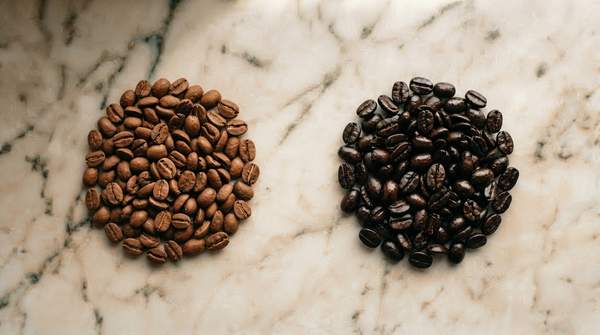
When your home-brewed coffee tastes sour, sharp, thin, or hollow, that cup is under-extracted: the water hasn't dissolved enough of the coffee's flavor compounds. When it tastes dry, harsh, astringent, excessively bitter, or unpleasantly lingering, it's over-extracted. In either case, the first fix is the same variable — grind size. Sour coffee calls for a finer grind; bitter coffee calls for a coarser one, changed one adjustment at a time until the cup balances out.
Understanding Coffee Extraction: The Flavor Journey
Extraction is simply the process of water dissolving flavor compounds out of ground coffee, and it doesn't happen all at once. Brewing educator guidance from Online Barista Training describes it as a spectrum: the same grounds can yield too little flavor, a balanced sweetness and complexity, or too much of the harsh stuff, depending on how far the water carries the process.
What makes the spectrum taste the way it does is the order in which compounds leave the grounds. Bright acids dissolve early and dominate a cup that finishes too soon, which is why under-extracted coffee reads as sour and thin. The late arrivals are the heavier, bitter-tasting compounds, and if brewing runs too far, they pile on top of everything pleasant that came before them. That sequencing is what your palate is reporting when it flags a cup as sharp or as astringent — it's telling you where along the journey the water stopped.
Only a handful of variables move you along that curve, as Bonnie Hazelwood lays out in a Podium Coffee Club brewing guide: grind size, water temperature, brew time, the coffee-to-water ratio, and the freshness of the beans themselves, which sets the ceiling on everything above it.
Diagnosing Common Coffee Flavor Problems
Diagnosis starts with precision. "My coffee is bad" isn't a diagnosis, as Hazelwood puts it — before changing anything, take a small sip slowly and pick the single word that fits best. The vocabulary matters because each word points somewhere specific.
The sour cluster — sour, sharp, thin, salty, hollow, lacking sweetness — signals under-extraction. Common causes include a grind that's too coarse, insufficient brew time, or water that isn't hot enough, according to the troubleshooting guide from Mochas & Javas. The bitter cluster — dry, harsh, astringent, excessively bitter, unpleasantly lingering — signals over-extraction, driven by a grind that's too fine, a brew time that runs too long, or water that's too hot.
Both diagnoses assume you're starting with decent, freshly roasted beans and reasonable water. If the coffee itself is stale, no amount of dialing will rescue the cup, which is why freshness caps the whole system.