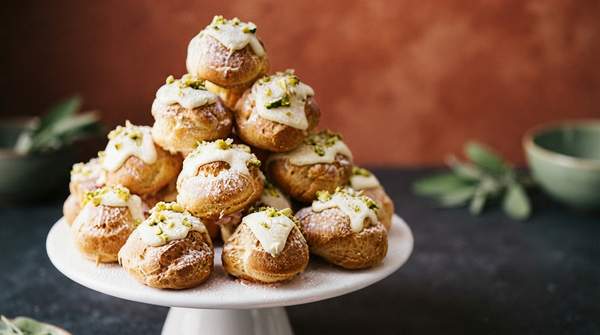
Every pastry texture you have ever bitten into is the result of a controlled negotiation between fat, flour, and water. Shortcrust, puff, and choux pastry use essentially the same three ingredients, yet one shatters into crumbs, one rises into paper-thin sheets, and one puffs into a hollow shell. The difference lies entirely in technique: how the fat is distributed, how much gluten is allowed to form, and what does the leavening. Once you can see those three levers, you can stop following recipes blindly and start steering them.
Introduction: The Science of Pastry Texture
Pastry is, at its heart, a gluten-management problem. When wheat flour meets water, wheat proteins hydrate and cross-link into an elastic gluten network — wonderful for bread, disastrous for pastry. As LSU's AgCenter food science guidance explains, the ideal flour for most pastry sits around 11% protein, enough for controlled structure without excessive stretch; lower-protein pastry flour suits crumbly textures, while high-protein bread flour belongs to stretchy doughs like phyllo. Water is the other double-edged ingredient: it binds the dough together, but excess water means excess gluten and a tough crust. Every pastry technique you will encounter is, in one way or another, a strategy for keeping gluten in check while still building structure.
Mastering Tenderness and Flakiness: The Role of Fat
Tenderness and flakiness are two distinct goals, and fat achieves each one differently. Food scientist Christina Marsigliese, writing at Scientifically Sweet, draws the line clearly: tenderness comes from finely dispersing fat evenly throughout the flour, where it acts "like a moisture barrier," coating and separating small particles of flour from each other. This coating protects wheat proteins from linking up into gluten that "would make the pastry too strong and chewy like bread dough." The result is a crumbly, tender bite.
Flakiness demands a different fat strategy. Larger, colder pieces of fat survive mixing, then flatten into sheets as you roll the dough, physically separating layers of stronger dough. In the oven, those fat layers melt and any moisture they carry turns to steam, prying the layers apart into distinct flakes. Temperature is the non-negotiable variable here. The AgCenter notes that the best flakiness comes from fats that are 15–25% solids at room temperature — for butter, a sweet spot of 58–68°F — which is why recipes obsess over cold butter, cold tools, and chilling steps. Marsigliese compresses the whole doctrine into one rule: "make it COLD & bake it HOT."