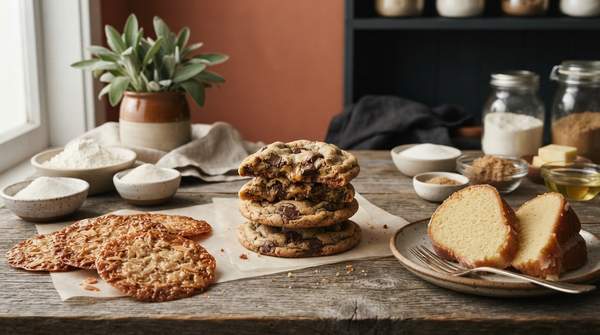
Baking texture isn't luck—it's chemistry you can control. The chewiness of a bagel, the snap of shortbread, and the crumble of a tender cake all trace back to three ingredients and one central contest: a tug-of-war over water between sugar and flour's structure-building proteins. Once you understand that dynamic and know which type of each ingredient to reach for, you can stop guessing and start engineering the exact bite you want. This guide gives you the science, then a practical framework for choosing flour, fat, and sugar to hit your target texture.
The Science of Texture: Flour, Fat, and Sugar
Every baked good begins with the same basic negotiation. Flour contributes proteins that link into an elastic framework when hydrated; fat works against that framework by physically blocking it; sugar competes for the very water gluten needs to form. The University of Nebraska-Lincoln's Extension food specialists describe flour as the structural backbone of baked goods, while noting that simply varying ingredient proportions in a recipe alters the texture of the finished product.
That means texture is not fixed by any single ingredient—it emerges from the balance among all three. A dough where flour's proteins win the water contest becomes strong and elastic. A batter where fat and sugar dominate hydration becomes tender and soft. Your job as a baker is to tip that balance deliberately toward the outcome you're craving.
Flour's Foundation: Gluten and Protein Power
Structure starts with flour. Wheat flour contains proteins that interact with each other when mixed with water, forming gluten—that elastic framework that stretches to contain expanding gases as dough rises. As the Nebraska Extension explanation puts it, "the protein content of a flour affects the strength of a dough," and different wheat flour types contain varying amounts of these gluten-forming proteins.
In practical terms, this gives you a dial to turn. High-protein flours, like bread flour, build strong, elastic gluten networks—exactly what you want for a chewy bagel or a substantial pizza crust. Lower-protein flours, like cake flour, form weak gluten that yields tender, delicate results. All-purpose flour sits in between, which is why it works reasonably well across so many recipes. When a bake comes out tough or disappointingly fragile, the flour's protein level is one of the first places to look.
The Role of Fat: Shortening and Structure
Fat is flour's great counterweight. Whether solid—shortening, margarine, butter—or liquid oil, fat contributes tenderness, moistness, and a smooth mouthfeel, according to the Nebraska Extension specialists. Fats also enhance the flavors of other ingredients while adding their own, with butter being the classic example.
The mechanism matters: fat works by coating flour particles, which prevents too much gluten from developing. As Elizabeth Mesley of My Better Batch explains, this is what keeps cookies "tender instead of tough." This is the process food scientists call shortening—fat literally shortens the gluten strands before they can knit into a tough network. The more fat coats the flour, the less structure forms, and the more delicate your result. Butter deserves special mention here: Mesley credits it with bringing "flavor, tenderness, and structure" all at once, and notes that how it's incorporated into dough can dramatically change the final result.