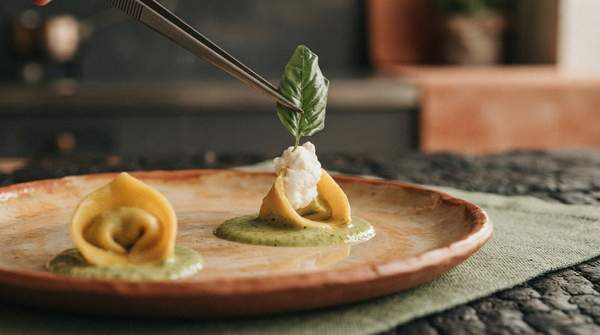
The modern tasting menu was born in 1970s France, when nouvelle cuisine chefs began replacing à la carte choice with a curated sequence of small, precisely composed dishes — and in the fifty years since, that single format has split into recognizably different philosophies. Today, a tasting menu might be a love letter to a specific landscape, a poem rendered in food, or a laboratory of deconstructed textures. Understanding which tradition a restaurant belongs to is the single most useful thing a diner can know before booking a table.
The Birth of the 'Menu Dégustation' in Nouvelle Cuisine
Before the tasting menu, fine dining in France meant à la carte service — an approach pioneered by Auguste Escoffier in the 1890s and still the norm in most restaurants today. As food writer Will Godfrey recounts for Tasting Table, haute cuisine existed in France well before the 1970s, but it generally centered on the diner choosing one or two substantial dishes from a long list. The tasting menu as we know it, he writes, "came to be in the 1970s with the birth of nouvelle cuisine in France."
The French tradition of the menu dégustation developed as a way for chefs to showcase a range of techniques and ingredients within a single sitting, rather than limiting a guest to one or two plates. That shift did something quietly radical: it moved control of the meal from the diner to the kitchen. As Tasting Table puts it, one thing about the format has remained constant — the diner has little choice over the dishes; "it's all or nothing."
An academic review of Western gastronomic paradigms, published in the journal Gastronomica and catalogued in the PubMed Central archive, describes what this looked like in practice. Under nouvelle cuisine, the chef became the restaurant's lead figure, diminishing the traditional protagonism of the maître d' and waiters. Recipes were no longer completed at the table; dishes arrived fully finished — a style the authors call "Japanese style service" — sometimes even covered by a bell, explicitly seeking to surprise the diner.
The same review notes that nouvelle cuisine increased the number of menu dishes while shrinking each portion, an "extensive sampling of minimal portions" designed to limit caloric intake and make the long, narrow menu compatible with a sedentary lifestyle — a philosophy the authors label cuisine minceur. Thick sauces disappeared, cooking times shortened, and raw foods entered haute cuisine in pursuit of naturalness and nutritional quality. The tasting menu, in other words, was not merely a serving format. It was the natural expression of a cuisine built on lightness, variety, and the chef's own inventiveness — a curated journey rather than a single destination.
From Tradition to Abstraction: The Influence of Molecular Gastronomy
If nouvelle cuisine gave the tasting menu its shape, the abstract gastronomy movement of the late twentieth and early twenty-first centuries gave it a new vocabulary. The same academic review of gastronomic paradigms details the movement's defining contributions: food deconstruction aimed to change a dish's texture without diminishing its aroma and flavor, while reconstruction pursued more radical modifications — the authors cite melon caviar, spherical olives, and agar-agar spaghetti as emblematic examples.
Texture became a sensory key to gastronomic pleasure in its own right. New texturizing and emulsifying molecules of industrial origin entered haute cuisine as ingredients, and liquid nitrogen was introduced to create new textures and temperatures. The movement widened the sensory field beyond taste and smell: sight, through what the authors call "edible landscaping," and even hearing became part of the designed experience.
Crucially for the tasting menu, abstract gastronomy framed food as an artistic and technical medium. The review describes the development of "total gastronomy" or "techno-emotional cuisine," and even the concept of "sensory anarchy" — a vindication of insipidity, as the authors put it, to explain new recipes that were not always understandable, or desired, by the diner. That last caveat matters. The format that nouvelle cuisine built to delight and surprise could, in its experimental phase, produce dishes that deliberately unsettled expectations.
This is where the tasting menu completed its transformation. What began as a sampler of a chef's range became a vehicle for a fully authored experience — a sequence of engineered sensations in which each course served the chef's vision rather than a diner's preference. The multi-course format was ideally suited to this: it could build an argument, stage a surprise, or carry a concept from first plate to last. And because the diner had surrendered choice at the door, the chef's imagination became the meal's organizing principle.
Contemporary Tasting Menu Philosophies: A Comparative Framework
Today the format has spread far beyond France, and restaurants around the world build entire concepts around it. But not all tasting menus pursue the same goal. Drawing on the historical evidence and contemporary examples, three broad philosophies emerge — regional, conceptual, and experimental — and knowing which one you're walking into is the difference between a meal that delights and one that bewilders.
Navigating Modern Tasting Menu Philosophies
The table below categorizes contemporary tasting menus by their primary goal, their characteristic elements, and named examples from the evidence. Use it to identify a restaurant's approach before you book, and to match the experience to what you actually want from an evening.
| Philosophy | Primary Goal | Defining Characteristics | Examples |
|---|---|---|---|
| Regional / Terroir-Driven | Express a specific place | Hyper-local and seasonal ingredients, foraging, traditional recipes, local suppliers and crafts — a dessert garnished with foraged wood sorrel in spring and honeysuckle in summer | Noma (Copenhagen), Ca Na Toneta (Mallorca) |
| Conceptual / Artistic | Tell a story or evoke an idea | A narrative or thematic structure guiding the courses; the menu as a canvas for creative expression | Atelier Crenn (San Francisco), Fernando Olea's Sazón menu (Santa Fe) |
| Experimental / Technique-Driven | Demonstrate technical innovation | Deconstructed and reconstructed dishes, new textures and temperatures (liquid nitrogen, industrial texturizers), techno-emotional cuisine | Restaurants working in the abstract gastronomy tradition |
The regional philosophy is perhaps the most intuitive. In regions with rich food history, tasting menus often feature local ingredients and traditional recipes, creating what Tasting Table calls a sense of place — something made famous by Noma's foraging-focused offering. In Mallorca, the team at Ca Na Toneta champions its local network of island suppliers and artisans, a commitment that extends to the artwork on display and the locally made crockery.
The conceptual philosophy treats the menu as a narrative structure. The clearest example from the evidence is Dominique Crenn's poem-driven tasting menu at Atelier Crenn in San Francisco, where the courses follow an authored artistic arc rather than a regional inventory. Fernando Olea's nine-course Sazón menu in Santa Fe, built around the flavors of Mexico, shows how a concept can also be cultural — a single idea carried across the whole meal.
The experimental philosophy descends directly from abstract gastronomy: these are menus where the technique itself is the point, where a course may arrive as a sphere, a foam, or something chilled in liquid nitrogen. The academic review's caution applies here more than anywhere — such recipes are, in its words, not always understandable or desired by the diner. A technique-driven menu offers the most surprise and the least familiarity; a regional menu offers the opposite. Course count, as the Escoffier culinary school's guide to the format notes, varies widely depending on the restaurant, so length alone tells you little about philosophy.
Choosing Your Culinary Journey
When selecting a tasting menu, consider whether you seek a deep connection to local ingredients, an artistic narrative, or a technically innovative experience. The three philosophies are not ranked — they simply reward different appetites, and the same diner might legitimately want a different one on different occasions.
You can identify a restaurant's philosophy before booking by reading the restaurant's menu description, the chef's philosophy statements, and reviews highlighting specific culinary approaches — language like "seasonal focus," "story-driven," or "experimental techniques" signals which tradition you're entering. A menu that names its farmers and foragers is telling you something different from one that names its techniques. Check those signals against the framework above, and you'll walk into your next tasting menu knowing not just what you'll eat, but why it was composed that way.