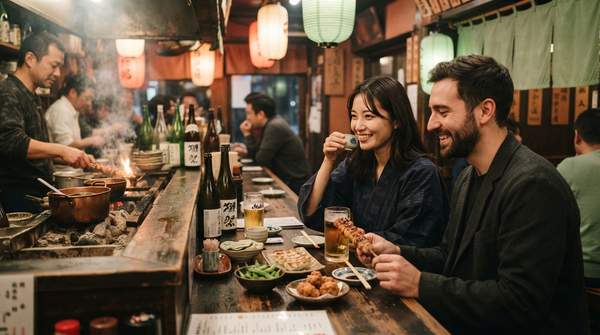
An izakaya is a Japanese pub-style eatery where you settle in, drink, and share small plates — and once you know its customs, it is one of the most welcoming dining experiences Japan offers. The name itself tells you how it works: Alicia Tan, writing on izakaya history and etiquette, explains that "izakaya" combines "i" (to stay) and "sakaya" (sake shop). You are expected to linger, not just to buy sake and go. This guide walks you through the whole visit, from the entrance to the bill, and connects today's customs to the tavern's Edo-period roots.
The Izakaya: Japan's Social Hub for Food and Drink
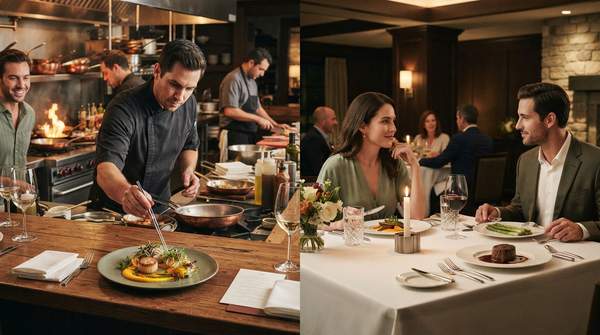
What makes the izakaya distinct is that the food is only part of the point. Writers on Japanese social dining describe it as the place "where stories are told, deals are struck, and friendships are forged," and where Japanese food culture "is lived rather than just observed." The environment, the service, and the company are what turn a meal into a memory — the drinks are almost a pretext.
The Official Tokyo Travel Guide, published by the Tokyo Convention and Visitors Bureau, characterizes the typical izakaya as serving "tasty, unpretentious food and beverages." Food comes mainly as smaller shareable dishes that are not too filling, prices are generally reasonable, and the atmosphere is famously laid-back. That combination — affordability, variety, and informality — is exactly why the izakaya endures as the heartbeat of after-work Japanese social life.
From Sake Shops to Social Eateries: A Brief History of the Izakaya
The izakaya began in the Edo period as a sake shop with a twist: customers were allowed to stay and drink on the premises. That single shift — from a shop you visited to a place you occupied — created an entirely new kind of establishment, and the "stay-and-drink sake shop" became a category of its own.
Food followed demand. As one food-history account by Nicolas at Gochiso History relates, cheap, filling fare proved so successful that other izakaya followed suit, offering simple dishes to complement the sake they were serving — and with those changes, the izakaya took its familiar current form. The menu kept evolving after the Meiji restoration of 1868 opened Japan to foreign trade. Beer arrived first as an imported, exotic drink, served in places like gyūnabe restaurants; as prices fell, beer spread, izakaya began serving it too, and today it is the most popular menu item.
The through-line is continuity of purpose. From Edo-period sake counters to the bustling chain izakayas of modern Tokyo, commentators on izakaya culture agree that the core mission has never changed: to provide a space where people can genuinely gather. Knowing that history explains why the modern izakaya behaves the way it does — small snacks, shared tables, drinks first.