Choosing a restaurant is really choosing a service style. The counter order that takes three minutes, the shared platters passed around a family table, the captain who describes each course with practiced care—these are different experiences with very different price tags attached. This guide compares six common service styles side by side—Quick Service/Fast Casual, Casual Dining, Family-Style, Buffet, American Plated, and Fine Dining—so you can match the style to your occasion, budget, atmosphere, and how much time you actually have. At the end, you will find a single comparison table and an explanation of why the bill rises as service becomes more labor-intensive.
Understanding Restaurant Service Styles
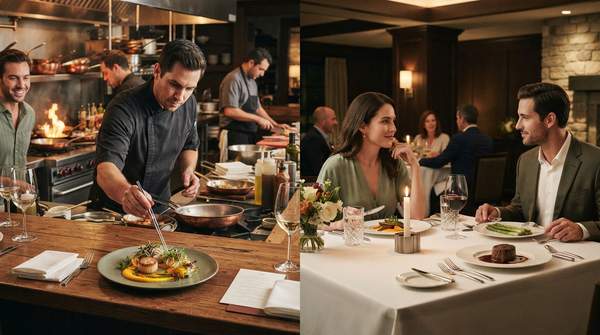
A service style is simply the mechanism by which food reaches you: counter pickup, table service from a waitstaff, shared platters, self-serve stations, or finished plate by finished plate. Dining guides describe the spectrum as running from quick-service meals ordered at a counter through casual table service to fine dining with several courses, with family-style shared dishes and buffets in between. Each mechanism implies its own pace, staffing level, and mood.
Why does this matter for diners? Because the best fit depends on what matters most to you: speed, price, atmosphere, or time together. A rushed weeknight dinner and a fiftieth-anniversary celebration should not default to the same restaurant. Before you book anything, one practical tip from dining industry guidance: when in doubt, ask the restaurant coordinator to describe exactly how food will be delivered and how many staff will be present. That single conversation clarifies the cost structure faster than any price figure alone.