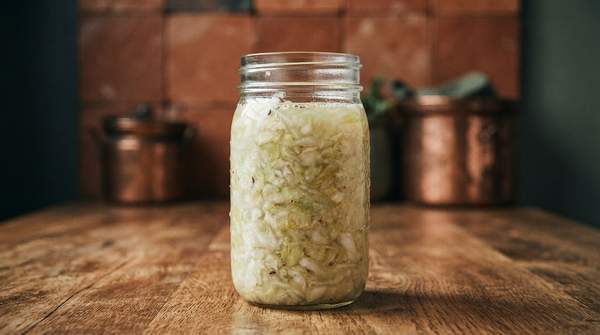
Fermentation makes food more nutritious and more delicious through two distinct but intertwined microbial feats: microbes release enzymes that dismantle anti-nutritional compounds guarding the minerals in grains, legumes, and milk, and their metabolism generates entirely new molecules—acids, alcohols, esters, aldehydes—that a raw ingredient simply doesn't contain. When I slice into a wedge of tangy sourdough or a nutty piece of tempeh, I'm tasting the output of specific biochemical pathways, not some vague magic. Here's the actual machinery underneath.
Unlocking Nutrients: How Microbes Tackle Anti-Nutrients
Plants have a storage problem, and it works against us. Cereals and legumes lock away much of their phosphorus—and, incidentally, their minerals—in the form of phytic acid salts, which a scientific review of fermented vegetables and legumes identifies as one of the classic anti-nutritional compounds of plant-based foods. These phytates bind minerals and get in the way of digestion. The same review explains the elegant counter-move: fermentation introduces microbes that produce the enzyme phytase, which degrades phytic acid and thereby improves the bioavailability of the whole product, including its calcium, zinc, and iron.
Other anti-nutrients fall to the same enzymatic siege. A review of fermentation in plant-based foods notes that phytates, tannins, and oxalates all hinder mineral absorption, and that fermenting microbes produce not only phytases but tannases—each enzyme matched to its target compound. Fermentation also degrades tannins and oxalates directly. The review's authors draw the practical consequence: reduced phytate levels have been correlated with enhanced mineral absorption, meaning fermentation literally releases nutrients that were bound and inaccessible in the raw ingredient.
What I find compelling is how targeted this is. The microbe isn't trying to help you absorb iron; it's metabolizing its substrate. But because the compounds it consumes happen to be the compounds blocking your mineral uptake, the side effect is a food that gives up its nutrients far more willingly.
Boosting Bioavailability: Iron, Zinc, and Calcium
Once phytase and its companion enzymes have done their work, the payoff lands on specific minerals. In cereals, a review by Milkesa Feyera published by Springer concludes that fermentation improves the bioavailability of essential trace minerals while reducing anti-nutritional factors such as phytates and tannins. The plant-based food literature connects two of those minerals explicitly: tannins hinder iron absorption, so degrading tannins improves iron bioavailability—and the same enzymatic logic extends to zinc, which phytates also bind.
Dairy offers the best-quantified example. According to a Frontiers review of probiotic-mediated nutrient enhancement authored by Fahad Saad Alhodieb, fermenting milk with Lactobacillus helveticus can raise bioactive peptide contents to as high as 300 mg per 100 g and increase folate to 200–350 μg per 100 g. The same review reports that calcium bioavailability rises by 10–20% in fermented dairy, attributing the increase to casein phosphopeptides that aid calcium binding and intestinal absorption. That figure belongs to fermented dairy specifically—it shouldn't be extrapolated to every fermented food on the shelf.
One honest caveat: while the mechanism is well documented, the retained literature doesn't uniformly attach a percentage figure to iron and zinc gains across all fermented cereals and legumes, the way it does for dairy calcium. The mechanism is solid; universal numbers are not. And none of this constitutes personalized nutrition advice—these are general principles about how foods change, not prescriptions about what you should eat.